The grammar of graphics
ggsql is a tool for visualising data, combining our 20 years of experience developing ggplot2 with a SQL-native syntax. Unlike most visualisation systems, ggsql has an underlying grammar, based on the Grammar of Graphics by Leland Wilkinson. This is a different approach than the one taken by most tools, which give you a set of pre-defined graphics, like scatterplots, bar charts, and pie charts. ggsql instead gives you a number of independent components that you can combine to solve a very wide set of problems:
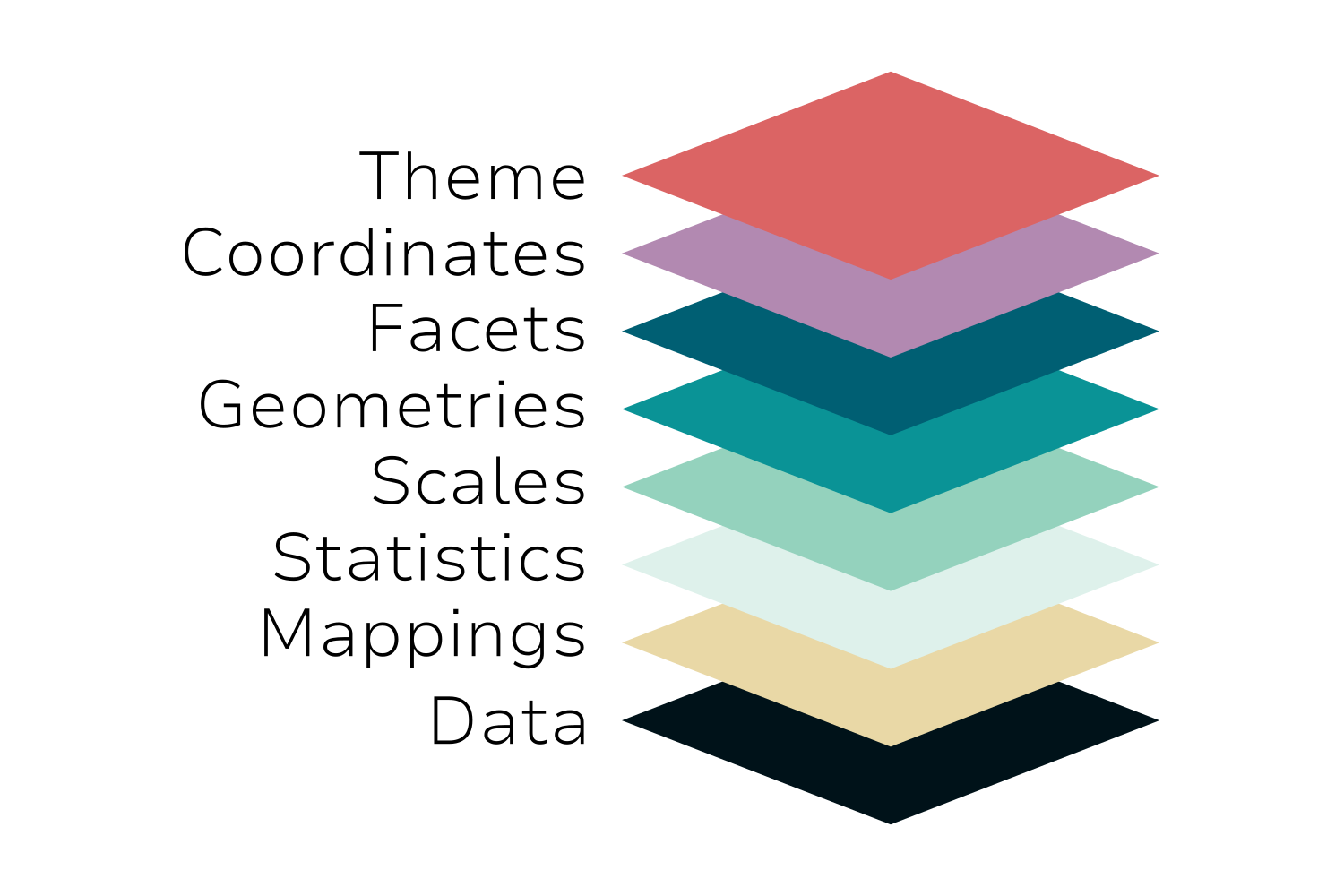
- Data Is the raw data that the plot is representing. Its in tabular format with variables as columns and observations as rows.
- Mappings Relate the columns in data to visual properties of the plot, called aesthetics.
- Statistics Optionally transforms the raw data before being used for plotting, e.g. by binning and counting it in a histogram.
- Scales Transforms the mapped data into values that are meaningful to the visual properties, e.g. by converting a column of text strings into a column of color values if it has been mapped to the fill color
- Geometries Define the visual representation of the data in the plot, e.g. lines, points, bars, etc.
- Facets Describe an optional subdivision of the input data, resulting in multiple plots of the same specification, all showing different subsets of the data.
- Coordinates Define how the position aesthetics (e.g. x and y) are converted into locations on paper or on the screen.
- Theme Handles all non-data-related styling of the plot, e.g. background color, title fonts, margins etc.
While all of this provides structure it also means that there may be a learning curve to ggsql: you have to learn a few big ideas about the grammar before you can be productive. But we believe the payoff is worth it. The grammar gives you new vocabulary and new ways to think about visualizations. This allows you to create not only familiar graphics but also newer, better graphics. You’ll gain the ability to look at a visualization that someone else has made, analyse the key components, then recreate it yourself. The hardest part of learning ggsql is likely to be unlearning the preconceptions that you bring over from previous visualization tools.
We’ve tried to make the learning curve as easy as possible by keeping the grammar close to the SQL syntax that you’re already familiar with. You’ll start with a classic SELECT statement to get the data that you want. Then you’ll use VISUALIZE (or VISUALISE 🇬🇧) to switch from creating a table of data to creating a plot of that data. Then you’ll DRAW a layer that maps columns in your data to aesthetics (visual properties), like position, colour, and shape. Then you tweak the SCALEs, the mappings between the data and the visual properties, to make the plot easier to read. Then you FACET the plot to show how the relationships differ across subsets of the data. Finally you finish up by adding LABELs to explain your plot to others. This allows you to produce graphics using the same structured thinking that you already use to design a SQL query.
In the end of this tutorial we will revisit the duality of the syntax and the grammar and also provide a handy table that shows how they relate to each other.